AI

AI Search and SEO: How Digital Visibility Is Changing

Rebeca Gimeno

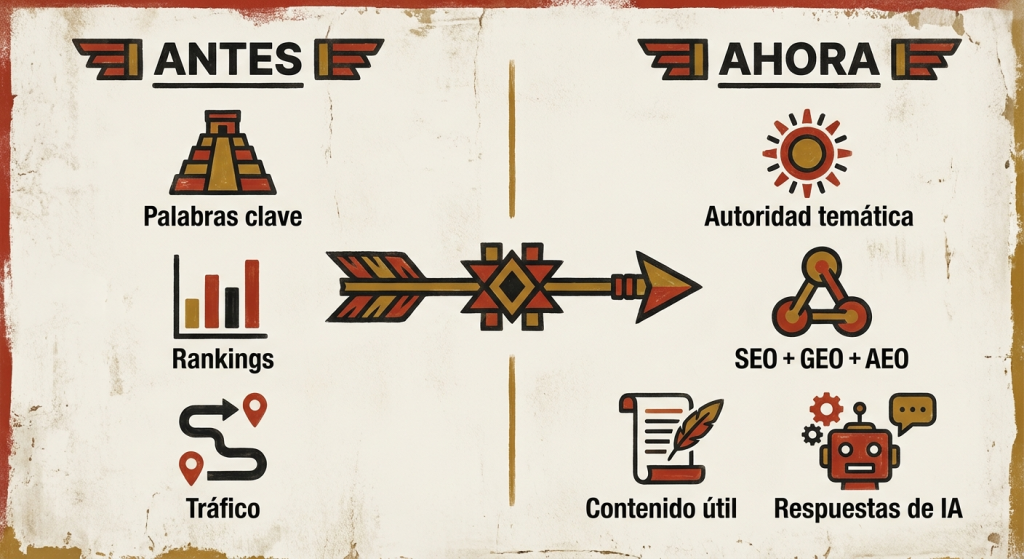
For years, SEO and organic search strategies were focused on a single goal: generating more traffic. Thus, more clicks, more visits, and a stronger presence in search engines were the main indicators of growth.
However, the emergence and rapid adoption of generative artificial intelligence tools are beginning to change the way people discover information, compare options, and make decisions online.
In recent months, various industry analyses have begun to observe an interesting phenomenon: traffic from AI-driven experiences may behave differently from traditional traffic. Reports shared by Adobe, for example, suggest that some users coming from AI platforms have higher conversion rates than those from other digital channels.
Beyond the specific data point, what matters is what this behavior reveals about the evolution of search and user intent.
But it’s important to understand this shift correctly. The conversation shouldn’t focus on whether AI will “replace” SEO or on the assumption that traditional traffic is losing value. In fact, the opposite is true: the rise of generative experiences makes it even more important to build solid content, subject matter authority, and a trustworthy digital presence.
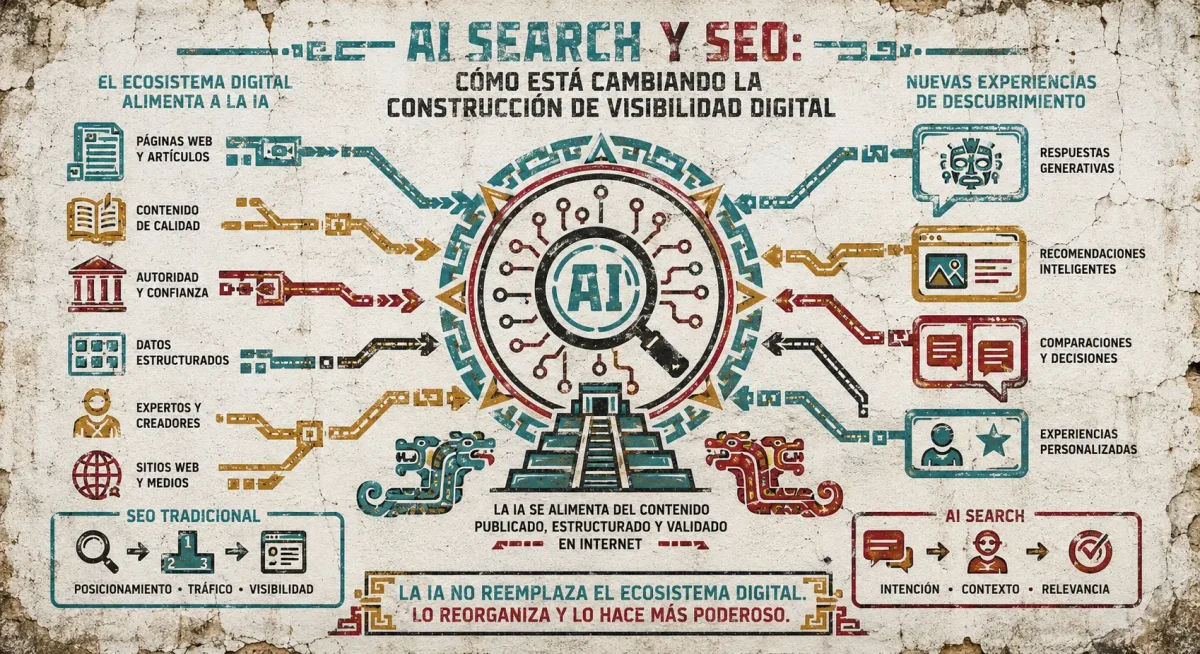
AI does not emerge in isolation from the digital ecosystem. It draws on content that has already been published, structured, and validated on the internet. Therefore, even as search interfaces change, the fundamentals of visibility remain relevant.
However, the emergence and rapid adoption of generative artificial intelligence tools are beginning to change the way people discover information, compare options, and make decisions online.
In recent months, various industry analyses have begun to observe an interesting phenomenon: traffic from AI-driven experiences may behave differently from traditional traffic. Reports shared by Adobe, for example, suggest that some users coming from AI platforms have higher conversion rates than those from other digital channels.
Beyond the specific data point, what matters is what this behavior reveals about the evolution of search and user intent.
But it’s important to understand this shift correctly. The conversation shouldn’t focus on whether AI will “replace” SEO or on the assumption that traditional traffic is losing value. In fact, the opposite is true: the rise of generative experiences makes it even more important to build solid content, subject matter authority, and a trustworthy digital presence.
AI does not emerge in isolation from the digital ecosystem. It draws on content that has already been published, structured, and validated on the internet. Therefore, even as search interfaces change, the fundamentals of visibility remain relevant.
How AI and Search Intent Are Changing Traffic
When a user performs a traditional search, they typically go through several stages before making a decision. They visit various pages, compare options, read reviews, and browse through multiple results.
In contrast, conversational AI tools typically condense part of that process into a faster, more contextualized experience.
This does not necessarily mean that the user stops researching. What changes is the way the user organizes information and reaches certain decision points.
For example, someone interested in choosing automation software will no longer necessarily search only for phrases like “best CRM platforms.” Today, they can turn to an AI tool and ask directly, “Which CRM is best suited for a small business with remote teams and a focus on B2B sales?”
The difference is significant. The search query already includes context, specific needs, and a much clearer intent. By the time the user finally arrives at a brand’s website, many of their initial questions have likely already been filtered out by AI.
That’s where some experts are beginning to see a possible explanation for the higher conversion rates associated with certain AI environments: it’s not just a new source of traffic, but users who may arrive having made a more informed decision or with more clearly defined criteria.
However, it is important to avoid drawing sweeping conclusions. Traditional traffic remains essential for the early stages of discovery, brand positioning, and demand generation. Furthermore, not all sectors, industries, or types of searches behave in the same way.
What does seem clear is that intent dynamics are evolving. And that evolution is forcing brands to look beyond the volume of visits and focus also on the contextual quality of the traffic they receive.
Why AI Won’t Replace SEO: Content Remains the Foundation of Visibility
One of the most common mistakes in discussions about AI and search is to frame them as opposing concepts. In reality, generative platforms and conversational engines rely heavily on the existence of structured, relevant, and reliable content.
In other words: much of the AI-generated responses are based on information previously published on the internet.
That’s why concepts that have been fundamental to SEO for years remain just as important:
- Subject Matter Expert
- Content Quality
- Semantic Clarity
- Experience and Reliability
- Technical Structure
- Editorial Consistency
When a brand creates useful, in-depth, and well-organized content, it not only improves its chances of ranking in traditional search engines, but it also increases its chances of becoming part of the information ecosystem that powers AI-driven experiences.
This changes the strategic perspective. The conversation is no longer limited to simply “ranking” on Google. It now also involves building a digital presence that can be interpreted, understood, and prioritized within generative environments.
For example, a specialized article that clearly answers frequently asked questions, provides relevant context, and organizes information effectively is more likely to become a useful resource for both users and AI systems.
In a way, AI is reinforcing principles that SEO has been following for years: creating content that truly helps, addresses specific needs, and builds trust.
In this context, SEO is no longer viewed solely as a practice geared toward traditional search engines but has established itself as a comprehensive discipline of digital visibility.

GEO and the Impact of AI on the New Search Ecosystem
Amid these developments, a relatively new concept has begun to gain prominence: GEO, or Generative Engine Optimization.
Although the term is still in the early stages of being defined within the industry, it is often used to describe strategies aimed at improving the visibility of brands and content within AI-powered generative experiences.
The interest in GEO reflects an obvious reality: search habits are changing.
More and more users are turning to conversational platforms to:
- Research Products
- Resolving Complex Issues
- Compare Services
- Summarize information
- Discover Brands
- Get recommendations
However, viewing GEO as “a replacement for SEO” would be a strategic mistake. Rather than an entirely new discipline, GEO appears to be a natural evolution of principles that SEO already relied on: relevance, structure, clarity, and authority.
Brands that have historically built subject matter authority, a solid content architecture, a strong user experience, and organic search rankings will likely be better positioned to adapt to the new generative environment. Not because there’s a magic formula for “optimizing for AI,” but because the fundamentals of quality remain crucial.
Therefore, rather than talking about a replacement, it is more useful to view the current situation as an expansion of the search ecosystem.
Search no longer takes place in just one place. Today, users can discover information from:
- Traditional search engines
- Conversational assistants
- Hybrid platforms
- AI-Powered Engines
- Experiences Integrated into Applications
And in all of these scenarios, digital authority remains a key factor in visibility.
Content and SEO Strategies Brands Should Prioritize in the Age of AI
The emergence of new search dynamics does not mean that companies should abandon their current strategies to chase trends without a clear direction. In fact, many of the most effective strategies continue to be built on solid foundations of content and organic search rankings.
What has changed is the need to develop more comprehensive strategies tailored to different digital discovery environments.
Create truly useful and in-depth content
Superficial content, created solely to attract clicks, is becoming less and less valuable. Both users and AI platforms prioritize clear, specific, and well-developed information.
But today, “useful content” means more than just answering basic questions. It means providing context, addressing real concerns, and helping users move forward with a decision.
For example, an article on automation tools should no longer be limited to simply listing platforms. It also needs to explain the differences, use cases, limitations, and scenarios in which each option makes sense.
It is that level of depth that begins to make a difference in both search engines and generative experiences.
Build subject matter authority consistently
Publishing standalone content is no longer enough. Brands that succeed in building greater relevance tend to develop entire ecosystems around specific topics.
For example, a company specializing in cybersecurity shouldn’t just publish occasional articles about digital threats. It also needs to develop content related to prevention, regulatory compliance, risk management, technology infrastructure, and industry trends.
That kind of comprehensive and consistent coverage reinforces the perception of expertise and authority.
In addition, it helps search engines and AI systems better understand the areas in which a brand is thematically relevant.
Prioritize clarity, structure, and context
The way content is organized matters more than many brands realize.
Clear headings, logical structure, a well-organized hierarchy of information, and semantic context enhance both the reading experience and the understanding of the information.
This doesn’t just help human users. It also makes it easier for digital systems to correctly interpret relationships between concepts, topics, and responses.
In an environment where some content will be summarized, synthesized, or interpreted by AI, structural clarity becomes even more important.
Commit to credibility and real-world experience
In an ecosystem saturated with automatically generated content, trust becomes an even more valuable differentiator.
Brands that demonstrate real experience, specialized knowledge, and editorial consistency will have a better chance of building sustainable relevance over the long term.
Because when anyone can create content quickly, the real difference no longer lies in publishing more. It lies in creating information that truly deserves to be used as a reference.

The Future of SEO and Digital Visibility in the Age of AI
The emergence of AI tools is accelerating significant changes in the way people interact with information. However, reducing this transformation to an “SEO vs. AI” narrative oversimplifies a much more complex scenario.
What we’re seeing isn’t the end of organic search, but rather an evolution of the digital discovery ecosystem.
Traditional searches will remain essential. Conversational search engines will continue to grow. Hybrid experiences will likely become more common. And amid all of this, brands will need to build a strong, consistent, and trustworthy digital presence.
Because regardless of the channel or interface users employ to discover information, one thing remains constant: relevance continues to be built on useful content, subject matter authority, and trust.
The difference is that brands no longer compete solely to appear in search results. They also compete to become trusted sources within ecosystems where information will be interpreted, summarized, and recommended by artificial intelligence.
In this scenario, digital visibility is no longer solely dependent on search rankings. It begins to depend on how relevant, trustworthy, and useful a brand is in an environment where responses are increasingly contextual, conversational, and AI-powered.
That’s why, rather than replacing SEO, AI Search is redefining the way brands build digital authority.
At Zenit, we help brands adapt to these changes in search through content strategies, SEO, and digital visibility designed for environments where relevance is no longer measured solely by clicks, but also by responsiveness, context, and trust.